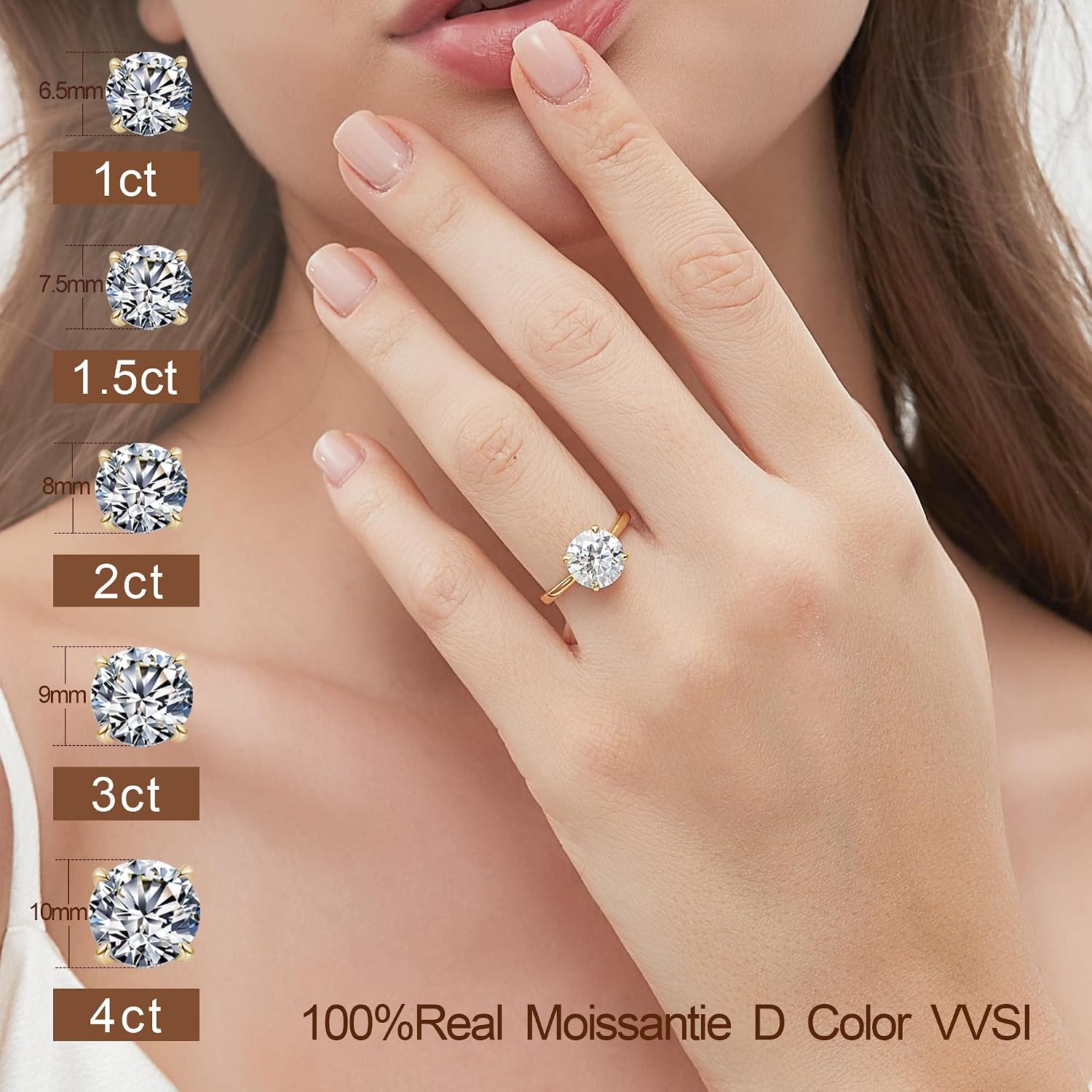
You’re shopping for a center stone for an engagement ring or a significant piece of jewelry, and two options keep surfacing: moissanite and lab-grown diamonds. Both are real, physical gemstones — not fakes, not glass — but they come from very different places and carry very different price tags. Moissanite is a silicon carbide crystal, originally discovered in a meteor crater and now grown in controlled laboratory environments specifically as a gem-quality stone. A lab-grown diamond is chemically and physically identical to a mined diamond — same carbon structure, same hardness, same optical properties — just grown in a reactor instead of the earth over millions of years. The question most buyers ask first is: which one is cheaper? But the smarter question, especially if you’re making a decision that’s supposed to last a decade or more, is: which one costs less to own over time? This breakdown answers that with specific numbers, honest trade-offs, and decision rules you can apply to your actual situation.
| EDITOR'S PICK[Gem Stone King 1-5 Ct IGI Certi…](https://www.amazon.com/dp/B0FY3YKTFK?tag=greenflower20-20) | Mid-tier10k white gold 1.0 CT Classic 6… | Budget pick[JewelryPalace Classic 1ct 2ct 3…](https://www.amazon.com/dp/B0BRC7K51J?tag=greenflower20-20) | |
|---|---|---|---|
| Stone type | Lab-grown diamond | Moissanite | Moissanite |
| Certification | IGI Certified | — | — |
| Carat weight | 1.00 ct | 1.0 CT | 1ct 2ct 3ct |
| Metal type | 14K Two Tone Gold | 10k white gold | 925 Sterling Silver |
| Stone color | D-E | — | — |
| Stone clarity | VS1-VS2 | — | — |
| Price | $940.49 | $256.99 | $29.99 |
| See on Amazon → | See on Amazon → | See on Amazon → |
The Starting Price Gap Is Real — and Wider Than You Think
Let’s anchor the math to a specific, commonly purchased size: a 1.5-carat round brilliant center stone set in a white gold solitaire ring.
By the numbers (May 2026 market conditions):
| Stone | Estimated retail price (1.5 ct, excellent cut, VS clarity equivalent) | Tier |
|---|---|---|
| Moissanite (premium brand, e.g., Charles & Colvard Forever One) | $600–$900 | JewelryPalace — $29.99 |
| Lab-grown diamond (GIA-certified, Excellent cut, VS1–VS2) | $1,800–$2,800 | 10k — $256.99 |
| Natural mined diamond (equivalent specs) | $9,000–$14,000+ | Gem — $940.49 |
Pricing ranges derived from PriceScope community pricing data and direct-to-consumer retailer listings, May 2026.
At purchase, moissanite is roughly 60–70% cheaper than an equivalent lab-grown diamond. That gap was narrower two years ago; lab-grown diamond prices have compressed significantly since 2022 as production scaled globally. But moissanite has always sat at a fundamentally different price tier, and that structural gap has not closed.
The practical implication: if upfront cost is the binding constraint — say, you have a firm $1,000 budget for the center stone — moissanite is the only path to a 1.5 ct or larger visual presence at that price. No comparable lab-grown diamond hits that price point at reputable certified retailers.
What “Ownership Cost” Actually Means Over 10 Years
The purchase price is one data point. A complete ownership model includes durability, maintenance, insurance, and resale value. Each of those components behaves differently depending on which stone you choose.
H3: Durability and Maintenance Costs
Both stones are extremely hard. On the Mohs hardness scale — the standard measure of scratch resistance for gemstones — diamonds score 10, the theoretical maximum. Moissanite scores 9.25–9.5, according to gemological property documentation published by the International Gem Society in their moissanite reference materials. In practical daily-wear terms, both stones resist scratching from keys, countertops, and gym equipment. Long-term wearers across jewelry communities consistently report that moissanite shows no visible surface wear after years of daily use. For a ring worn every day, this distinction rarely surfaces in practice.
Routine maintenance — prong retipping every three to five years, rhodium plating on white gold settings once or twice per decade, professional cleaning — runs the same regardless of which stone occupies the setting. Budget approximately $50–$150 per year for a conscientious wearer, or roughly $500–$1,500 over ten years. This cost is entirely stone-agnostic.
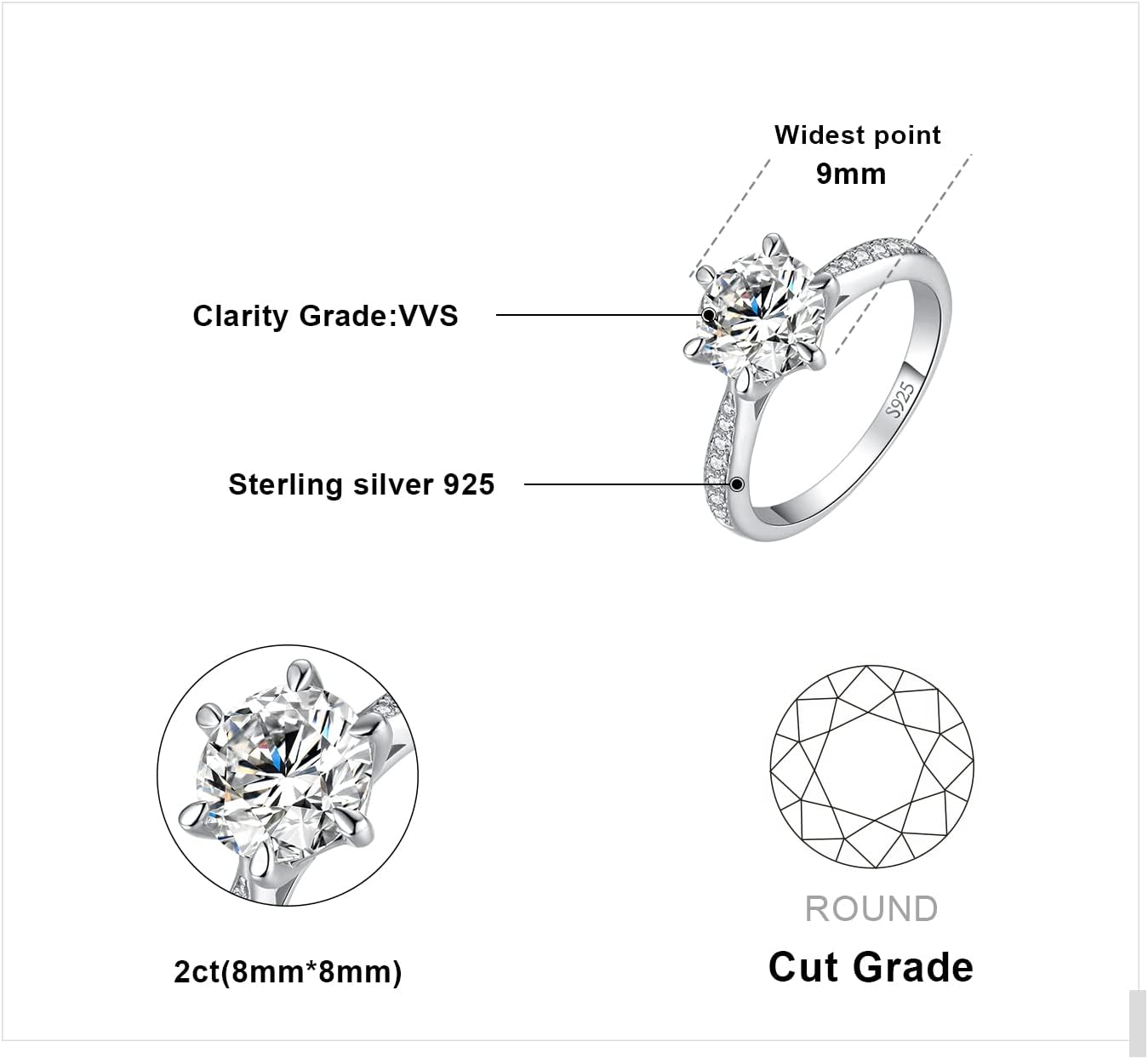
JewelryPalace
$29.99
In stock on Amazon
Check price on AmazonH3: Insurance Costs Over a Decade
Jewelry insurance is typically priced as a percentage of the appraised replacement value — commonly 1–2% annually, a range consistent with consumer guidance covered in editorial features at both Brides and Wirecutter in their jewelry insurance reviews. A moissanite ring appraised at $1,200 costs roughly $12–$24 per year to insure. A lab-grown diamond ring appraised at $3,000 runs $30–$60 per year. Over ten years:
- Moissanite insurance: approximately $120–$240 total
- Lab-grown diamond insurance: approximately $300–$600 total
The gap is real but not dramatic on its own. The more consequential variable is documentation: the GIA has issued grading reports for lab-grown diamonds since 2019, per the GIA’s lab-grown diamond grading program documentation. Those reports provide a verifiable record of cut, color, clarity, and carat that supports insurance precision and resale transparency. Moissanite is graded by its manufacturers — Charles & Colvard’s “Forever One” classification is the most widely recognized standard — but not by independent gemological laboratories such as the GIA. For insurance purposes, obtain a written appraisal from a GIA-trained gemologist for either stone to establish documented replacement value.
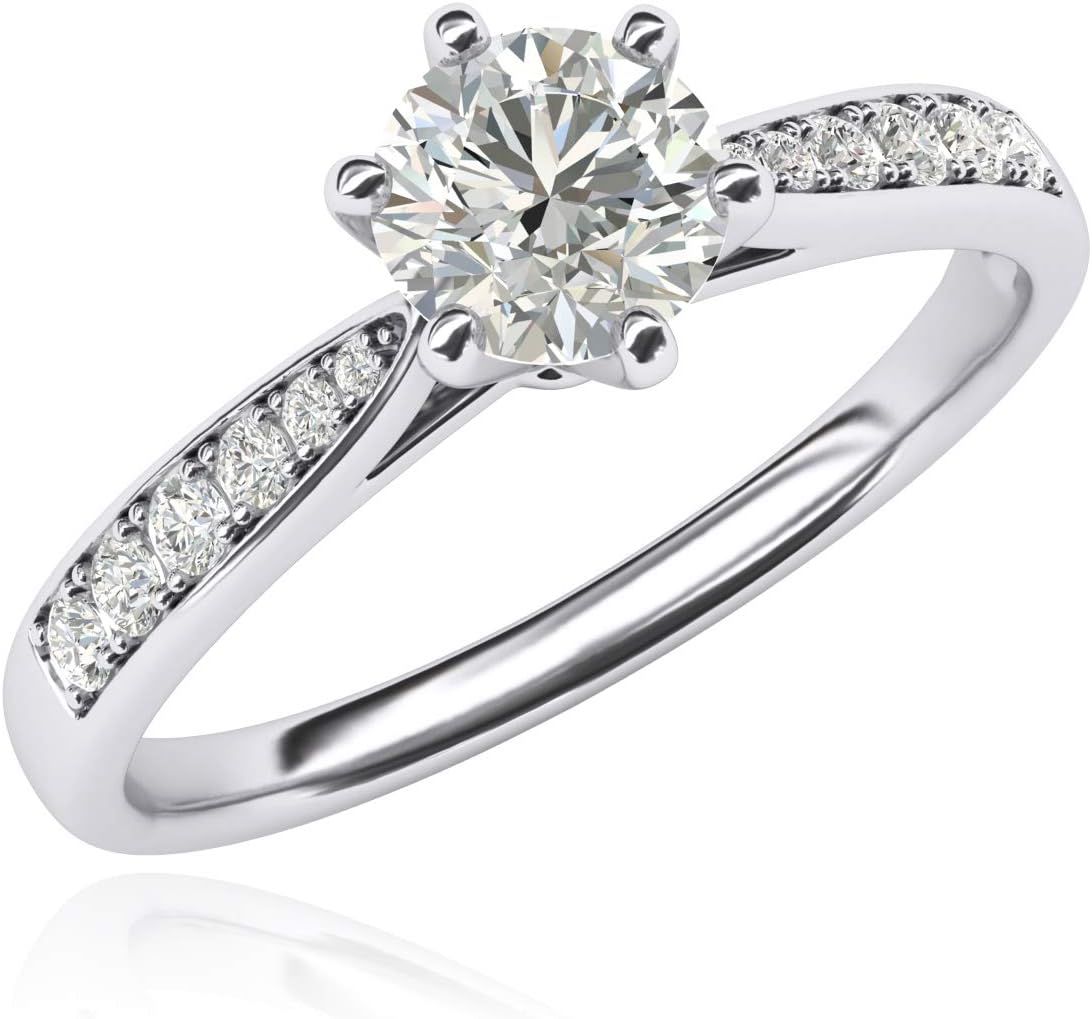
10k
$256.99
In stock on Amazon
Check price on AmazonH3: Resale Value — The Number That Changes Everything
This is where the decision framework shifts most decisively, and where many buyers are surprised.
Lab-grown diamond resale value has dropped sharply as production has outpaced consumer demand. Editorial coverage at Brides tracking the lab-grown diamond resale market in 2024–2025 noted that secondary-market sellers were frequently recovering 20–40 cents on the dollar — sometimes less through general resale channels. Retailers rarely offer meaningful buy-back programs, and the trend has not reversed.
Moissanite resale value is, bluntly, minimal. It was never positioned as an investment. Reselling a moissanite ring privately returns a fraction of purchase price, and most jewelry resellers decline to purchase them at meaningful prices.
Here is the counterintuitive conclusion: both stones have poor resale trajectories, but moissanite loses less in absolute dollar terms because you spent less to begin with.
- Spend $800 on a moissanite ring, recover $100 on resale: net loss of $700
- Spend $2,400 on a lab-grown diamond ring, recover $600 on resale (25%): net loss of $1,800
The moissanite buyer absorbs a smaller absolute loss — even though the percentage loss may be similar or worse. Over a ten-year ownership window, this asymmetry matters more than the percentage headline.
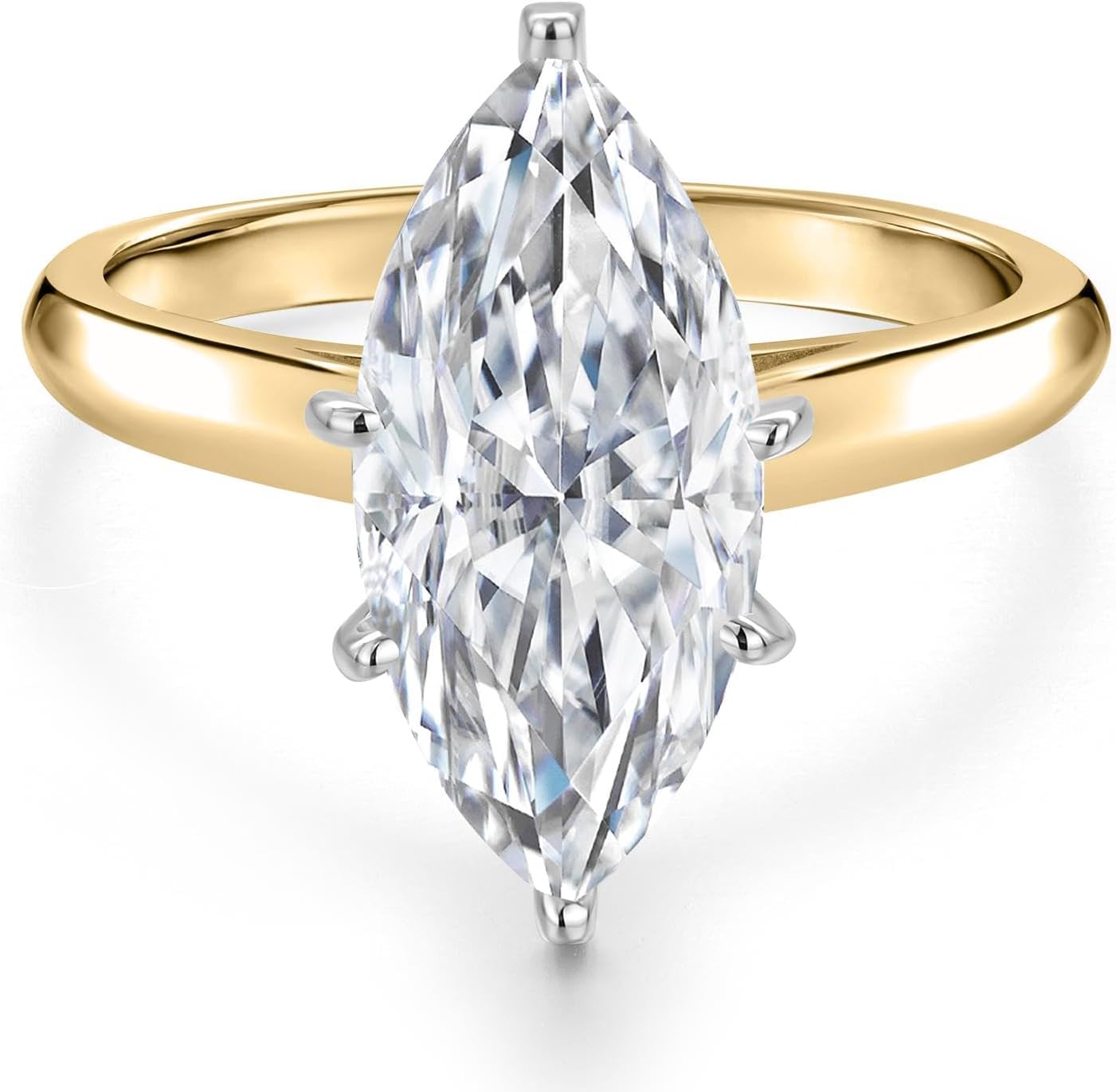
Gem
$940.49
In stock on Amazon
Check price on AmazonThe 10-Year Total Cost Summary
Pulling this together for a 1.5 ct round brilliant in a white gold solitaire setting, worn daily:
| Cost component | Moissanite | Lab-grown diamond |
|---|---|---|
| Purchase price (stone + basic solitaire setting) | ~$1,200 | ~$3,200 |
| 10-year maintenance | ~$750 | ~$750 |
| 10-year insurance | ~$180 | ~$450 |
| Estimated resale recovery (subtracted) | −$100 | −$640 |
| Net 10-year cost | ~$2,030 | ~$3,760 |
Figures are illustrative estimates based on current market pricing per PriceScope community data (May 2026) and standard industry benchmarks for insurance and maintenance. Individual results vary by retailer, insurer, and resale conditions.
The moissanite option costs roughly $1,700 less over ten years in this model. That is a meaningful premium for what is, in daily use, a slightly different-looking stone with comparable durability.
Optical Performance: The Qualitative Cost of Living With the Stone
This is a qualitative but consequential factor that the pure cost model cannot fully capture.
Moissanite and diamonds have different optical signatures. Moissanite has a higher refractive index (2.65–2.69 versus diamond’s 2.42) and significantly higher dispersion — the property that produces spectral “fire,” or rainbow-colored light flashes. The GIA’s published gemological reference material on moissanite properties notes this distinguishing optical behavior explicitly. For some buyers, the resulting brilliance is a feature. For others — particularly those who have compared the two stones side-by-side in bright light — moissanite reads as visually distinct from diamond in a way that becomes more noticeable over years of daily wear.
Lab-grown diamonds perform optically and physically identical to natural mined diamonds, as confirmed by the GIA’s lab-grown diamond grading program. A well-cut lab-grown diamond in a white metal setting is indistinguishable from a mined diamond to any non-specialist observer, and to most gemologists without instruments.
If your long-term satisfaction depends on the stone looking exactly like a diamond — particularly for buyers who have spent time comparing the two in person — this distinction carries real weight. The International Gem Society’s moissanite resource materials describe moissanite as having “brilliance that rivals diamond,” while noting that the fire character is distinctly different rather than identical. Different is not lesser, but it is a preference variable that deserves honest consideration before purchase.
Where Lab-Grown Diamond Wins on Non-Cost Axes
The ten-year cost math favors moissanite. But cost is not the only decision variable for a piece of jewelry intended to mark a significant life event.
Certification infrastructure. GIA-certified lab-grown diamonds carry the same grading report structure as natural diamonds: cut, color, clarity, carat, and a unique report number laser-inscribed on the girdle. For buyers who value verifiable documentation — for insurance, estate planning, or eventual resale — this infrastructure has practical value that moissanite’s manufacturer grading currently does not replicate.
Symbolic and cultural weight. For many couples, a diamond — even a lab-grown one — carries cultural significance that the moissanite category does not share. The Knot’s Real Weddings Study 2025 data on engagement ring preferences consistently shows that a meaningful share of buyers in the $1,500–$3,500 budget range prioritize the diamond category over stone size. This is not an irrational preference; jewelry is partially symbolic, and the word “diamond” carries meaning that survives the natural-versus-lab distinction for many wearers and families.
Fancy color availability. Lab-grown diamonds are available in controllably produced fancy colors — yellow, blue, pink — at dramatically lower cost than natural fancy colored diamonds. Moissanite is available in limited near-colorless options but does not offer a comparable fancy color range for buyers seeking something beyond white or near-colorless.
The If-Then Decision Rules
If your budget is under $1,500 for the entire ring and you want maximum visual size: moissanite is the clear answer. No 1.5 ct or larger lab-grown diamond with credible third-party certification reaches that price point at reputable retailers.
If you’re spending $2,000–$4,000 and the diamond identity matters to you or your partner — either symbolically or because you’ve compared both stones in person and prefer diamond’s optical character — a lab-grown diamond is the better long-term emotional fit, even at higher cost.
If you’re making a purely financial argument and accept that resale value is negligible for both options: moissanite wins the ten-year cost model by approximately $1,700 in the scenario modeled here.
If documentation and certification are important — for insurance precision, estate purposes, or the ability to have the stone independently verified at any point — a GIA-certified lab-grown diamond provides infrastructure that moissanite currently does not.
If you’re buying for a gift in a non-engagement context and the recipient has not expressed a stone preference: the optical distinction matters less than setting quality and craftsmanship. Moissanite in a well-made setting is a genuinely beautiful stone with optical properties the International Gem Society describes as rivaling diamond in brilliance — the fire character is different, not inferior.
The honest version of this comparison is that neither stone is the objectively correct answer for every buyer. Moissanite is cheaper to own over ten years, holds up comparably in daily wear, and is undervalued by buyers who conflate “not a diamond” with “not beautiful.” Lab-grown diamonds cost more, hold resale value poorly, but carry the full diamond identity — GIA certification, identical optical signature to natural diamonds, and cultural weight — that still matters decisively to a significant share of buyers. Know which axis you’re optimizing for, and the choice resolves itself quickly.