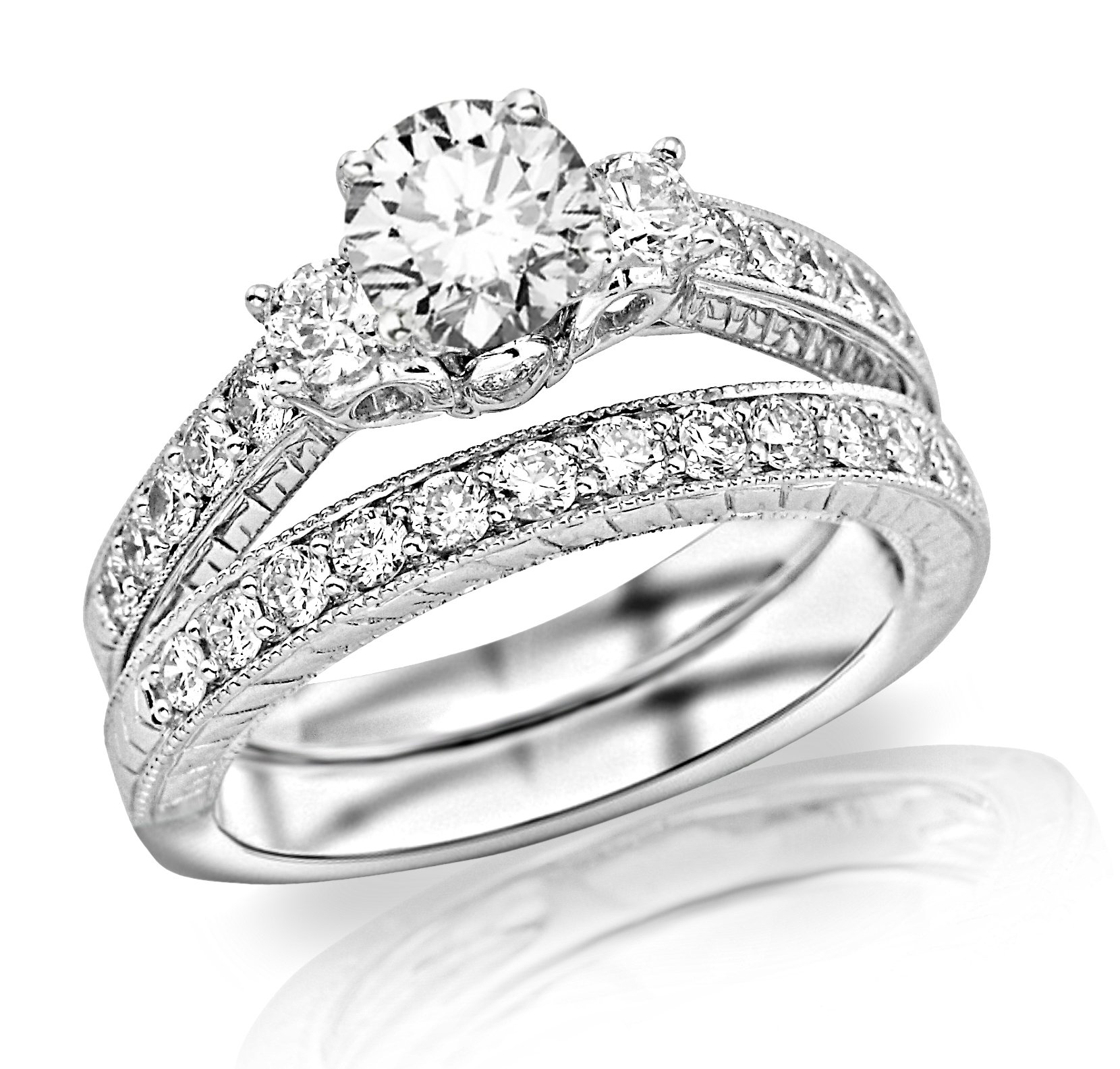
Imagine you’re scrolling Amazon late on a Tuesday night. You find a listing: “1.0 ct Round Brilliant Natural Diamond Engagement Ring, GIA Certified, G/VS2.” The price is $2,400. You’ve been quoted $3,100 for something similar at a local jeweler. The listing includes a scan of what looks like an official certificate. Is this a deal — or a trap?
That’s the question this guide answers. GIA (the Gemological Institute of America) is the world’s most trusted diamond grading laboratory. A GIA report is not a seller’s opinion; it’s an independent scientific evaluation of a diamond’s cut, color, clarity, and carat weight. But a GIA report number appearing in an Amazon listing title is not the same thing as holding that report in your hand and verifying it matches the stone in the ring. This article walks you through exactly how to close that gap — what to check, what the numbers actually mean, and when Amazon is a reasonable channel versus when it isn’t.
What a GIA Report Actually Tells You (and What It Doesn’t)
A GIA Diamond Grading Report covers the four “Cs” — cut, color, clarity, and carat weight — for a loose diamond, graded under controlled laboratory conditions. According to GIA’s Consumer Education materials on gia.edu, a full grading report also includes a plotted clarity map, proportions diagram, and a unique report number that is laser-inscribed on the diamond’s girdle (the thin outer edge).
Here is what the report does not tell you:
- How the diamond looks in a setting. Cut grade is the most powerful predictor of visual beauty, but proportions interact with specific ring designs. A diamond can earn “Excellent” on a GIA report and still appear dim in a deep bezel setting.
- Whether the diamond in the listing is the one with that report number. The report number is tied to a loose stone, not to the finished ring. Any reputable seller must confirm the girdle inscription matches.
- The quality of the mounting. GIA grades the diamond. The ring metal, prong work, and setting craftsmanship are entirely outside the report’s scope.
- Current market pricing. A GIA report tells you what the stone is, not what it’s worth relative to today’s market. As of mid-2026, natural diamond prices at the 1.00–1.50 ct round brilliant range have stabilized after the lab-grown pressure of 2023–2025, but spreads between comparable GIA-graded stones remain wide depending on cut sub-grades.
The Gem Society’s overview of diamond cut grading on gemsociety.org notes that two diamonds with identical GIA “Excellent” cut grades can vary meaningfully in light performance because GIA’s cut grade covers a range of proportions, not a single ideal. This matters when you’re reading an Amazon listing that says “Excellent cut” — it’s a necessary but not sufficient data point.
The Amazon Diamond Listing: A Checklist Before You Buy
When you’re looking at a GIA-certified diamond ring on Amazon, treat the listing like a contract term sheet. These are the specific items to verify before anything else.
1. Verify the Report Number on GIA’s Website
Every authentic GIA report has a number that can be looked up in real time at gia.edu’s report check tool. Paste the number from the listing. If it doesn’t resolve, or resolves to a different diamond (different weight, different shape), stop. Do not proceed.
This is non-negotiable. PriceScope community aggregated findings have documented cases where Amazon third-party sellers list a GIA number that belongs to a different, lower-value stone than the one photographed. The image looks good; the paper doesn’t match.
2. Confirm the Report Type
GIA issues several document types, and they are not equivalent:
| Report Type | What It Covers | Useful for Buying? |
|---|---|---|
| GIA Diamond Grading Report | Full 4Cs + proportions + plot | Yes — the gold standard |
| GIA Diamond Dossier | Full 4Cs, no clarity plot | Yes, for stones under ~1.0 ct |
| GIA Diamond Origin Report | Grading + provenance claim | Yes, if origin matters to you |
| GIA Gem ID / eReport | Digital only, fewer details | Use with caution — verify scope |
| Third-party or “IGI,” “EGL” reports | Not GIA | Treat as ungraded for comparison |
An Amazon listing that mentions “certified” without specifying GIA — or that shows a report from IGI, EGL, or a house lab — is not equivalent. As The Knot’s engagement ring shopping guide notes, grading standards vary significantly across laboratories, and EGL in particular has historically graded color and clarity more generously than GIA, meaning a stone called “G/VS2” by EGL may grade as “I/SI1” under GIA standards.
3. Read the Cut Sub-Grades, Not Just the Grade
GIA’s overall cut grade (for round brilliants) runs from Excellent down to Poor. But buried in the proportions section are three sub-components: polish, symmetry, and the underlying table/depth percentages. A diamond can earn “Excellent” overall with “Very Good” polish and symmetry. For a sub-$2,000 purchase this is a reasonable tradeoff; for a $3,000–$5,000 engagement ring, you want all three components at Excellent, which is what the market calls a “triple excellent” (3EX).
Amazon listings rarely display this sub-grade data. If the seller doesn’t include the full report scan or a GIA report link, request it in writing before purchasing. If you can’t get it, that is itself useful information.
4. Check the Seller Type and Return Window
Amazon’s diamond listings come from three seller types: Amazon’s own jewelry inventory, third-party sellers fulfilled by Amazon (FBA), and third-party sellers shipping directly. The return window and who you’re dealing with differs materially. A 30-day return window from a well-rated FBA seller is workable. A 15-day window from a third-party seller with 200 reviews and no phone number is not adequate for a $2,000+ purchase.
By the numbers: In mid-2026, the average GIA-graded 1.0 ct round brilliant, G color, VS2 clarity, Excellent cut trades in the $4,200–$5,800 range through dedicated diamond retailers (per aggregated PriceScope data). Amazon listings for the same spec frequently appear at $2,800–$3,800. The spread is real — but so is the variance in what “same spec” means once you read the full report.
The Tradeoffs: Amazon vs. Dedicated Diamond Retailers
This is the decision frame most practitioners are actually facing. You’ve found an Amazon listing at a price that’s 15–25% below what you’ve been quoted elsewhere. Here is what you’re actually trading.
What Amazon offers:
- Competitive pricing, especially on commoditized specs (round, near-colorless, VS2)
- Prime return logistics, which simplifies the risk of buyer’s remorse
- Convenience — one checkout, familiar UI
- Occasionally, strong value on GIA-graded stones from established jewelry brands that also sell on Amazon as a distribution channel
What dedicated diamond retailers offer:
- Light performance images (ASET, Idealscope, Hearts & Arrows viewers) that let you evaluate the specific stone before purchase — Amazon listings almost never include these
- Diamond comparison tools (Blue Nile, James Allen, Whiteflash all show actual photographs and proportion data for each listed stone)
- Expert human review — at Whiteflash, for example, each super-ideal stone is individually vetted against proportion tolerances beyond GIA’s stated grade
- Clearer provenance and conflict-free documentation beyond the Kimberley Process certification
- Setting craftsmanship accountability — you’re buying from a jeweler, not a marketplace
The Knot’s buying guide makes a useful point: for buyers who know exactly what they want and can read a GIA report competently, online diamond retail has largely commoditized the buying process. The question is whether Amazon’s version of that process gives you enough data to make the same decision. In most cases, it doesn’t — not because Amazon diamonds are fake, but because the listing format strips out the information you need to evaluate cut performance.
When Amazon Makes Sense — and When It Doesn’t
After reviewing the landscape, here is the honest decision rule:
If X (buying from Amazon makes sense):
- You’ve already verified the GIA report number on gia.edu and it resolves correctly
- The listing shows full proportions data (table %, depth %, crown and pavilion angles)
- The seller has a documented return policy of 30+ days
- The stone is in the “commodity sweet spot” — round brilliant, G–H color, VS1–VS2, under 1.0 ct — where cut variation matters less to the casual eye
- You’re under $1,500 total and optimizing for price-to-certification ratio
If Y (use a dedicated diamond retailer instead):
- The stone is over $3,000, where cut performance differences are both detectable and financially meaningful
- You want to compare light performance images for multiple stones before deciding
- The shape is non-round (ovals, cushions, pears have no GIA cut grade — you’re entirely dependent on proportions and imagery that Amazon typically doesn’t provide)
- You want human expertise to confirm proportions align with visual performance
- The recipient will wear this every day for decades, and “it looked fine in the listing photo” isn’t a sufficient standard
GIA’s own consumer guidance on gia.edu is clear that a grading report is a starting point, not a final answer — the report tells you what the stone is, while your eyes (aided by performance imagery) tell you whether it’s beautiful. Amazon’s listing infrastructure, as of 2026, doesn’t reliably support the second step.
The Bottom Line
Amazon sells legitimately GIA-certified natural diamonds. The channel is not a scam by default. But a GIA report number in a listing title is a promise, not a guarantee — and the marketplace format was not built to give you the verification tools that the promise requires.
The practical move: use the GIA report check tool before you click purchase, not after. Know the difference between a full Diamond Grading Report and a lesser document type. Recognize that “Excellent cut” covers a range, and that range matters more as the stone’s price increases. And if you’re spending more than $2,500 on the center stone, the 15–20% you might save on Amazon is almost certainly worth less than the light performance data, stone photography, and return flexibility that dedicated retailers provide at comparable prices.
A GIA report is one of the best consumer-protection tools in fine jewelry. Use it — but use it actively, not as a passive trust signal on a listing page.